Adapting to your new reality

Adjusting to a new program, a new school, or sometimes even a new country takes time to adapt and find your bearings. For many of you, finding an apartment, connecting to Wi-Fi, getting used to a new culture and making new social contacts are some of the challenges ahead of you.

Mobirise

Nature of doctoral work

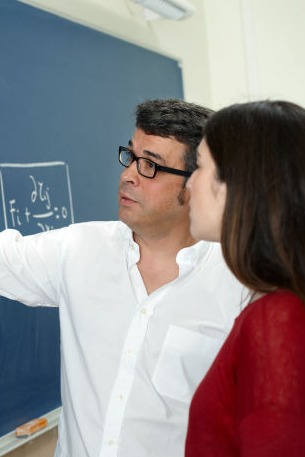
At the graduate level, the hierarchical relationship between students and professors becomes a more collaborative, discussion-oriented relationship than at the undergraduate level. It is one in which arguing and debating ideas is not seen as impolite and disrespectful, but rather as a way of moving the thought process forward. In addition, the nature of doctoral work requires adapting to autonomous learning: clear and precise corrections increasingly give way to suggestions. Also, going from a more structured academic context at the undergraduate level to a less structured environment at the graduate level could create a feeling of ambiguity and require adjustments on your part. This is completely normal. Moreover, you will go through several stages throughout your Ph.D. journey that will require new skills and adaptation, in particular when transitioning from completing your course work to developing and writing your thesis proposal.

Since all these new experiences can be both exciting and stressful, they can cause strong and uncomfortable reactions. These reactions are normal and should fade as you become familiar with your new situation. Having trouble adapting to new circumstances does not mean that you have psychological problems.

Your approach to change and how you deal with it can make it easier to adapt: 

  • Gradually establish a routine and find new references: take familiar routes, go to the same places (e.g., grocery stores, restaurants, sports or hobby clubs).
  • Meet people with doctoral experience and share your experiences with them. This may help you manage your stress. Contact the Graduate Studies Student Association (AECS), for information about the workshops Staying on track during the writing phase and Gouvernail – Writing support for graduate students
  • Try to find missing information and clarify any ambiguity. Don’t be shy to ask questions. Discuss matters with the Academic Advisor for your specialization, fellow student in your program, the AECS or Student Services.
  • The quality and effectiveness of the supervisory relationship are important for your success: clarify roles and expectations with your supervisor.

© HEC Montréal, 2025

Free AI Website Software